On July 14, 2025, the Supreme Court of the United States ruled that a lower court’s order to pause federal layoffs and the dismantling of the Department of Education (DoE) should be overturned (Binkley, 2025; Howe, 2025). The Supreme Court ruling has evoked a sense of fear and concern for public school educators and administrators across the country, not least because there is a lack of general knowledge about the history and functions of the DoE.
Educators are concerned that the potential closure of the DoE will create downstream effects, as districts and schools lose desperately needed federal funding. As federal employees are laid off, there is a significant risk that expertise and resources which have taken decades to amass could be irrevocably lost. Barring future legal challenges, Secretary of Education Linda McMahon and President Donald Trump are empowered to continue with their planned downsizing and eventual dismantling of the DoE (McMahon, 2025).
Scope and Purpose
The importance of the DoE in the recent history of the United States and its impact on the lives of its citizens is hard to overstate. This brief argues that the dismantling of the Department of Education represents not merely an administrative reorganization but a deliberate rescaling of educational governance that will disproportionately harm students with disabilities, multilingual learners, and under-resourced districts—consequences most visible in Fort Worth ISD, where federal funding comprises nearly a quarter of the operating budget and where state takeover compounds the loss of federal oversight. Under the Trump administration, changes to the federal government are moving at unprecedented speed with minimal congressional or judicial oversight. DoE changes are no exception.
This research brief captures a particular point in the trajectory of changes to the DoE and addresses how these changes affect students and families in Fort Worth and surrounding communities. The goal is to equip educators, families, and community stakeholders with the information needed to understand what is being lost and what actions remain available.
History of the Department of Education
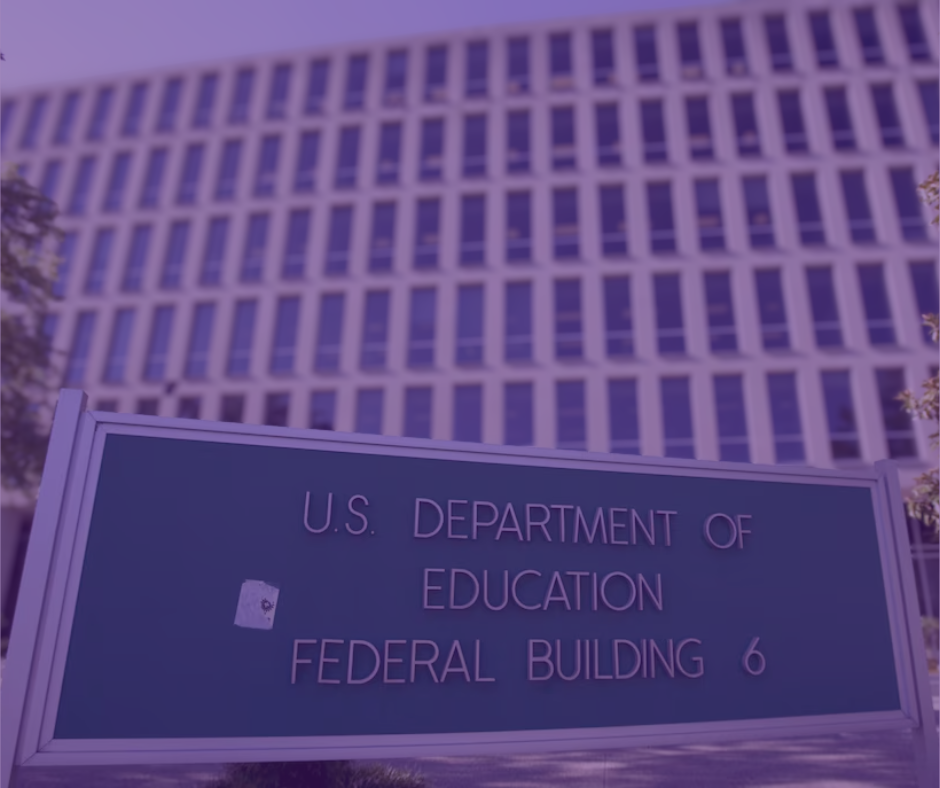
Congress created the DoE in 1867, and the modern form of the DoE emerged as a cabinet-level department in 1980, during the presidency of Jimmy Carter (“Federal Role in Education,” 2025). Historically, the DoE has served an important role in providing resources and protections for disadvantaged and minority students. In a modern context, the DoE provides funding for students and educational initiatives through programs such as Title I and Section 504 (NCES 2009; TEA 2025a).
The DoE provides funds for 50 million students across 98,000 public and 32,000 private schools (“Federal Role in Education,” 2025). Reducing federal funding provided by the DoE or making funding conditional on adopting particular ideological stances will necessarily create conditions of increased hardship for students most in need in our country, including migrant students and students with disabilities.
Efforts to shutter the DoE date almost as far back as its founding; in 1867, Congress created the DoE as a cabinet-level department, but just one year later, it was demoted to a non-cabinet office. In 1980, the Jimmy Carter administration re-elevated the DoE to the cabinet. President Ronald Reagan made the abolition of the DoE one of the central priorities of his campaign that same year, though the realization of this goal was rendered impossible by the resistance of the largely Democratic Congress in 1982 (Stengel, 2025). Since that time, many conservative candidates have run on a platform of abolishing the DoE, but none have yet been successful in their efforts.
More recently, the ideological document “Project 2025,” a 900-page report compiled by the Heritage Foundation, has justified the proposed elimination of the DoE by stating that federal oversight of education leads to unnecessary restrictions which limit families’ choices and which are out of step with the morals and values of many Americans (Burke, 2024). To an extent, this is true: the perception of the DoE skews heavily partisan. In a 2024 survey, Pew Research found that 44% of respondents had a favorable opinion of the DoE, while 45% of respondents had an unfavorable opinion. This ranks the DoE alongside the IRS and Justice Department as the lowest-approved federal government agencies in the survey (Desilver, 2025).
However, as leading civil rights organizations the Thurgood Marshall Institute of the Legal Defense and Education Fund, the American Civil Liberties Union, the Leadership Conference on Civil and Human Rights, the National Education Association, and the Disability Rights Education and Defense Fund, among others, have argued, elimination of the DoE under the policy recommendations of Project 2025 will have catastrophic consequences for civil rights in the United States (Fernandez, 2024; ACLU, 2025; McCurdy, 2024; Walker, 2024; Center, 2024). As Borelli and Gracia (2023) note in their analysis of Pew survey data, general understanding of the functions and structures of government varies widely by topic. Therefore, eliminating the DoE will have consequences that the average American citizen is not aware of or cannot accurately predict, because the average American may not fully understand the purpose and functions of the DoE.
Special Education
One of the largest programs administered by DoE is the Individuals with Disabilities Education Act (IDEA), which was originally authorized in 1975 (Dragoo, 2019). An estimated 8 million children with disabilities in the United States, or 15% of all students in the country, receive critical special education services through DoE funded programs administered under IDEA (NCES, 2024). Under the Reduction in Force ordered by Linda McMahon in March 2025, around 50% of staff at DoE were immediately put on leave or terminated, with core responsibilities of DoE being reassigned to other departments, such as the Labor Department (DeFusco, 2025). Moving core responsibilities once held by specialized experts out of DoE may create a deficit in services provided, especially since DoE employment has been slashed. In less than a year, staffing levels at the Office of Special Education Programs (OSEP) within DoE have been reduced from around 170 to fewer than five (CEC, 2025; CNN, 2025). In addition to direct funding, OSEP provides resources to educators and parents; without a robust department, resources and forms of support currently available could disappear soon, and potentially on a permanent basis.
In the state of Texas, the Texas Education Agency (TEA) has attempted to address some of the funding shortfalls created by the lack of DoE services through the creation of several measures, bundled together as HB2. Funding will be provided by the state for, among other services, providing initial evaluations, residential and day programs for the Deaf/Hard of Hearing, increases in transportation reimbursement, and grants for community-based support services (TEA 2025b, 2025c).
Local Context
In the state of Texas, an estimated 18.3% of public school funding comes from the DoE– an average of $2,700 per K-12 student in the state (USAFacts, 2024). This funding is desperately needed: in addition to providing student nutrition services, targeted initiatives, district-wide or school-wide assistance programs and disability services, the State of Texas uses federal funds to support Title II, Part A (ESC ESSA Basic Services Initiative) grants. These grants provide financial support for training and retention of high-quality educators and administrators in Texas public schools (TEA, 2024d). Programs like these are essential: in the 2022-23 school year, an estimated 23% of all teachers left their jobs. This percentage reaches an astonishing 30% for new-to-career teachers. More than half of teachers in Texas who left their district quit the teaching profession entirely (ERS, 2024). School districts need continued support in offering programs that increase teacher retention rates.
Fort Worth ISD is particularly dependent on federal funding: in the 2021-22 school year 23.6% of FWISD’s funding came from federal sources. Of the ten largest school districts in the state by student enrollment, FWISD also had the highest per capita federal expenditure for students: an average of $3,700 per student (USAFacts, 2024).
Next Steps
On July 25, the TEA published a Federal Grant Update, announcing that limited federal funding will be released on a conditional basis; these grants will primarily support Migrant and English Language Acquisition programs. TEA is currently awaiting clarification on some of the wording attached to the funding release, as well as clarification on a revision or change to funding allocation deadlines (TEA, 2025a). The conditions of the release include a reminder that funds are not to be used unconstitutionally, with an appended list of relevant laws, but no clarification as to why those particular cases, or the idea of unconstitutionality more broadly, are being invoked.
Fort Worth ISD has responded by pausing programs related to mental health, mentoring, and college counseling (Sanchez, 2025). In advance of the federal funding freeze, FWISD had already passed an unbalanced deficit budget, so it seems likely that in the absence of federal funding, local school districts will respond by cutting programs and laying off staff. It is unlikely that local funding will be raised through increased taxation, as homestead exemptions have already impacted budget projections through the 2025-26 school year (Morehead, 2025). This response has also been complicated by the recent announcement that the TEA will be taking over Fort Worth ISD (Mendez & Day, 2025).
As of November 2025, DoE has moved to reassign key functions to other departments, including the following:
-
- Oversight for colleges, universities, and K-12 schools is now under the Department of Labor
- Indigenous education has been reassigned to the Interior Department
- Assessment of accreditation of foreign medical schools and college parenting grants has been moved to Department of Health and Human Services
- Foreign language and international education are now overseen by State Department
Programs such as Special Education, the Office of Civil Rights, and Federal Student Aid have yet to be reassigned or restructured (Meckler & Douglas-Gabriel, 2025; Schermele, 2025).
In the absence of clear information– which programs will be affected, what conditions or restrictions will be added, what the overall total funding released will be, and from which sources– it is difficult to do more than simply speculate about the potential catastrophic impact to schools in the United States. However, districts are already taking drastic steps to ameliorate the potential loss of funds which will have impacts for years to come.
The dismantling of the Department of Education will reshape American public schooling for decades to come, but the outcomes are not yet fixed. Fort Worth families, educators, and community members have agency at this moment. Start by learning what federal programs currently serve your child's school—ask principals and district leaders which Title I supports, special education services, or English language programs depend on DoE funding. Attend school board meetings and demand transparency about budget cuts, program eliminations, and staffing changes. Contact state legislators and TEA officials to insist on replacement funding and continued civil rights protections for students with disabilities and multilingual learners. Connect with local advocacy organizations working to protect educational equity.
Most importantly, reject the narrative that the DoE was merely bureaucratic overhead. The expertise, resources, and protections built over fifty years are being dismantled in months. What we lose now—in teacher retention, student support services, and civil rights enforcement—will take generations to rebuild, if we can rebuild it at all. The question facing all of us is not whether these changes will have an impact, but whether we will organize to minimize the harm and protect the students who stand to lose the most.
About
Center for Public Education & Community Engagement (CPECE)
Recognizing education as a civil and human right, CPECE addresses issues that impact
students, educators, schools and communities. The center is involved in various initiatives,
strengthening public education by building partnerships and promoting research.
Alice Neeley Special Education Research and Services Institute (ANSERS)
ANSERS creates a vision for the field of special education through exemplary teaching,
creative research and community outreach. Our mission is to transform the quality
of life and learning for students with disabilities and their families through research
and evidence-based practice.
Andrews Institute for Research in Mathematics & Science Education
The Andrews Institute provides an environment for innovation and change in mathematics
and science education through research and teaching by TCU faculty and students. Affiliated faculty also collaborate with other organizations to provide outreach in
the community through workshops, community events and programs for teachers and youth.
Suggested citation
Andrews Institute for Research in Mathematics & Science Education, Alice Neeley Special Education Research & Service Institute, Center for Public Education & Community Engagement. January 2026. What Happens When the Department of Education is Dismantled: Implications for Fort Worth and Texas Schools. Education in Action. https://doi.org/10.18776/tcu/coe/06
References
ACLU. (2024, August 14). Project 2025, Explained. American Civil Liberties Union. https://www.aclu.org/project-2025-explained
Binkley, Collin. (2025, July 14). How Trump plans to dismantle the Education Department. AP News. https://apnews.com/article/trump-education-department-scotus-layoffs-student-loans-f24637f2a1d57432f6dc24d082e95b9b
Borelli, G., & Gracia, S. (2023, November 7). What Americans know about their government. Pew Research Center. https://www.pewresearch.org/short-reads/2023/11/07/what-americans-know-about-their-government/
Center, C. (2024, September 18). Project 2025 and the Disability Community - DREDF. DREDF. https://dredf.org/blog-post/project-2025-and-the-disability-community/
Council for Exceptional Children. (2025). Fact Sheet: The vital role of OSEP– and what’s at risk without it. https://exceptionalchildren.org/sites/default/files/2025-11/Fact%20Sheet%20The%20Vital%20Role%20of%20OSEP%E2%80%94and%20What%E2%80%99s%20at%20Risk%20Without%20It%20-%20Nov%202025.pdf
CNN. (2025). CEC’s Executive Director Chad Rummel on CNN - Mass Firings Impact Special Education Services. Council for Exceptional Children. https://exceptionalchildren.org/cecs-executive-director-chad-rummel-cnn-mass-firings-impact-special-education-services?srsltid=AfmBOopR_9uaeNSHXy2i5A7dXmZoDJh8xe_a22ZoUrZyrV5JHl5wU_Ic
DeFusco, J. (2025, November 18). Education Department announces new steps in downsizing push. WESH. https://www.wesh.com/article/education-department-downsizing/69473961
DeSilver, D. (2025, March 18). What the Data Says about the U.S. Department of Education. Pew Research; Pew Research Center. https://www.pewresearch.org/short-reads/2025/03/18/what-the-data-says-about-the-us-department-of-education/#how-do-americans-feel-about-the-education-departmenthttps://www.pewresearch.org/short-reads/2025/03/18/what-the-data-says-about-the-us-department-of-education/#how-do-americans-feel-about-the-education-department
Dragoo, K. (2019, August 29). The individuals with disabilities education act (IDEA) funding: A primer. Congress.gov. https://www.congress.gov/crs-product/R44624
Education Resource Strategies. (2024, March 14). Examining School-Level Teacher Turnover Trends: A New Angle on a Pervasive Issue. Education Resource Strategies. https://www.erstrategies.org/tap/teacher-turnover-trends-analysis/
Fernandez, M. (2024, September 23). What Project 2025 Means for Black Communities: Education Equity. The Thurgood Marshall Institute at LDF. https://tminstituteldf.org/project-2025-threats-to-education/
Howe, A. (2025, July 14). Supreme Court clears the way for Trump administration to massively reduce the size of the Department of Education. SCOTUSblog. https://www.scotusblog.com/2025/07/supreme-court-clears-the-way-for-trump-administration-to-massively-reduce-the-size-of-the-department-of-education/
Meckler, L., & Douglas-Gabriel, D. (2025, November 18). Trump administration to announce dismantling of some of Education Dept. The Washington Post. https://www.washingtonpost.com/education/2025/11/18/trump-administration-announce-dismantling-much-education-dept/
Mendez, M. , & Dey, S. (2025, October 24). What you need to know about Texas’ takeover of Fort Worth ISD. The Texas Tribune. https://www.texastribune.org/2025/10/24/what-you-need-to-know-about-texas-takeover-of-fort-worth-isd/
McCurdy, J. (2024, September 19). Project 2025: What’s At Stake for Civil Rights. The Leadership Conference on Civil and Human Rights. https://civilrights.org/project2025/
Morehead, S. (2025, June 18). Fort Worth ISD Passes Unbalanced Budget with $43 Million Deficit for 2025—2026. The Texan. https://thetexan.news/issues/education/fort-worth-isd-passes-unbalanced-budget-with-43-million-deficit-for-2025-2026/article_4e8853c4-4fbd-4e7e-ab49-cac6f302636d.html
National Center for Education Statistics. (2009). The NCES Fast Facts Tool provides quick answers to many education questions (National Center for Education Statistics). Ed.gov; National Center for Education Statistics. https://nces.ed.gov/fastfacts/display.asp?id=158
National Center for Education Statistics. (2024, May). Students with disabilities. National Center for Education Statistics; The Institute of Education Sciences. https://nces.ed.gov/programs/coe/indicator/cgg/students-with-disabilities
Sanchez, J. (2025, July 24). Feds release $5.6M in after-school funds for 3 Fort Worth-area districts. KERA News; KERA. https://www.keranews.org/education/2025-07-24/feds-release-5-6m-in-after-school-funds-for-3-fort-worth-area-districts
Schermele, Z. (2025). Education Department braces for further dismantling. USA TODAY. https://www.usatoday.com/story/news/politics/2025/11/18/education-department-dismantle-trump-interagency-agreements/87335568007/
Stengel, R. (2025, February 15). A Brief History of Efforts to End the Department of Education. TIME; Time. https://time.com/7225339/history-efforts-end-department-of-education/
Texas Education Agency. (2023, September 8). Title II, Part A — Supporting Effective Instruction. Tea.texas.gov. https://tea.texas.gov/finance-and-grants/grants/essa-program/title-ii-part-a-supporting-effective-instruction
Texas Education Agency. (2025a, July 28). Federal Grant Update | Texas Education Agency. Texas.gov. https://tea.texas.gov/about-tea/news-and-multimedia/correspondence/taa-letters/federal-grant-update-0
Texas Education Agency. (2025b, September 18). HB 2 Implementation: Special Education Program and Funding Updates | Texas Education Agency. Texas.gov. https://tea.texas.gov/about-tea/news-and-multimedia/correspondence/taa-letters/hb-2-implementation-special-education-program-and-funding-updates
Texas Education Agency. (2025c). House Bill 2, Article 4: Special Education-- Frequently Asked Questions. https://tea.texas.gov/about-tea/government-relations-and-legal/government-relations/89thlege-hb2-article4-special-education-faq.pdf
Texas Education Agency. (2025d, August 22). Section 504 | Texas Education Agency. Texas.gov. http://tea.texas.gov/academics/special-student-populations/section-504
U.S. Department of Education. (2025a, January 14). Federal Role in Education. U.S. Department of Education. https://www.ed.gov/about/ed-overview/federal-role-in-education
U.S. Department of Education. (2025b, July 14). Secretary McMahon Statement on Supreme Court Victory for Future of American Education. U.S. Department of Education. https://www.ed.gov/about/news/press-release/secretary-mcmahon-statement-supreme-court-victory-future-of-american-education
USAFacts. (2024). What percentage of public school funding in Texas comes from the federal government? | USAFacts. USAFacts. https://usafacts.org/answers/what-percentage-of-public-school-funding-comes-from-the-federal-government/state/texas/
Walker, T. (2024, October 4). How Project 2025 Would Devastate Public Education | NEA. Nea.org; National Education Association. https://www.nea.org/nea-today/all-news-articles/how-project-2025-would-devastate-public-education