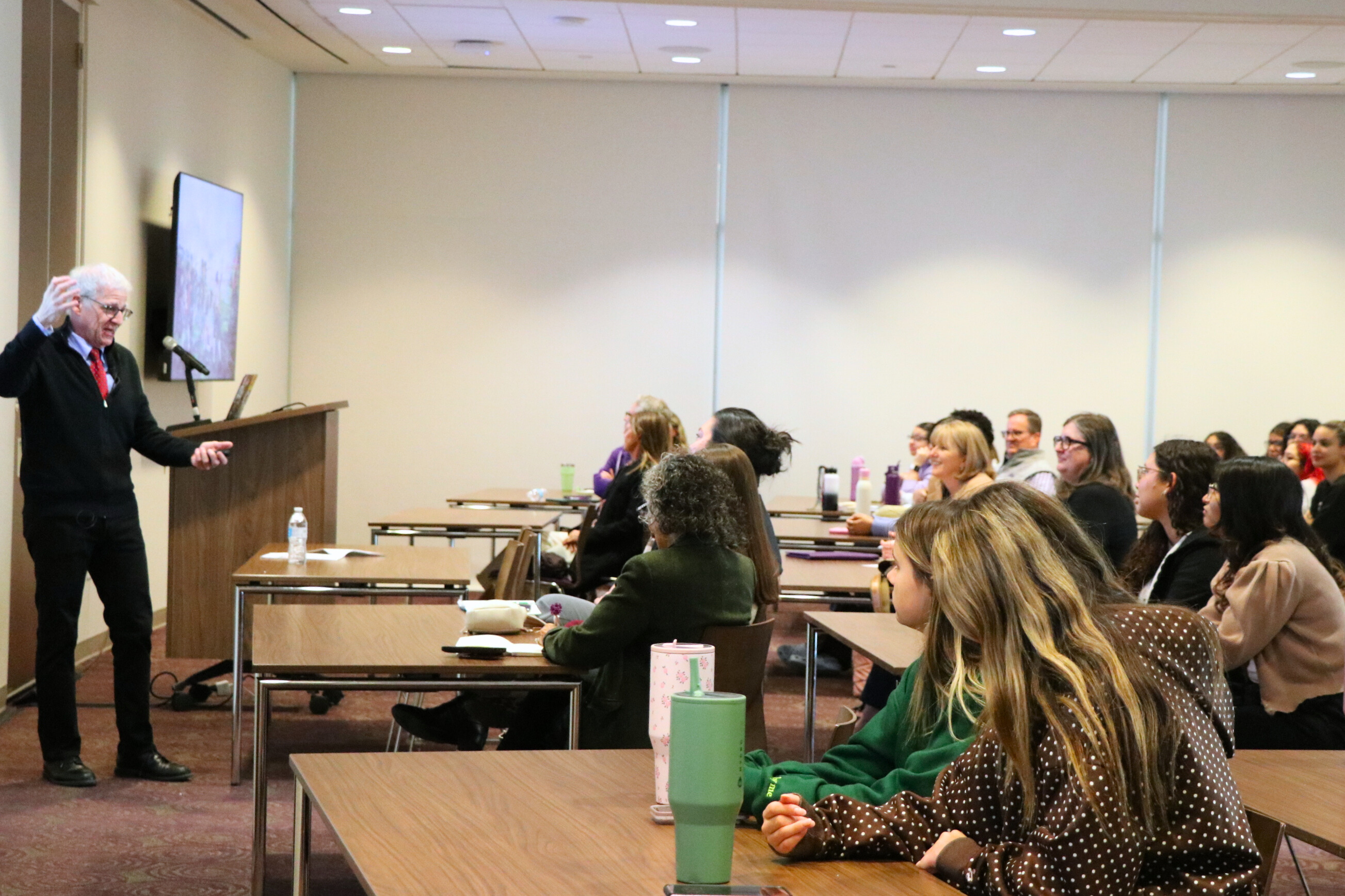
When attending a lecture on verifying information in the social media age, you likely wouldn’t expect to be shown a diary entry from 1775, but that’s the example that Sam Wineburg used to illustrate the necessity of critical thinking when speaking at TCU. The Margaret Jacks Professor of Education Emeritus at Stanford University was the College of Education’s Green Honors Chair lecture this semester.
Despite the 250-year gap in technology, the example demonstrated the importance of asking questions about the sources of information, whether they be a British military officer writing about the first battle of what would become the American Revolution or simply a regular person posting on TikTok.
“The most basic questions we could ask as citizens, as critical thinkers, is, ‘Who wrote it? Should I believe this person? Is it possible that there is an ulterior motive? Where does information come from?’”
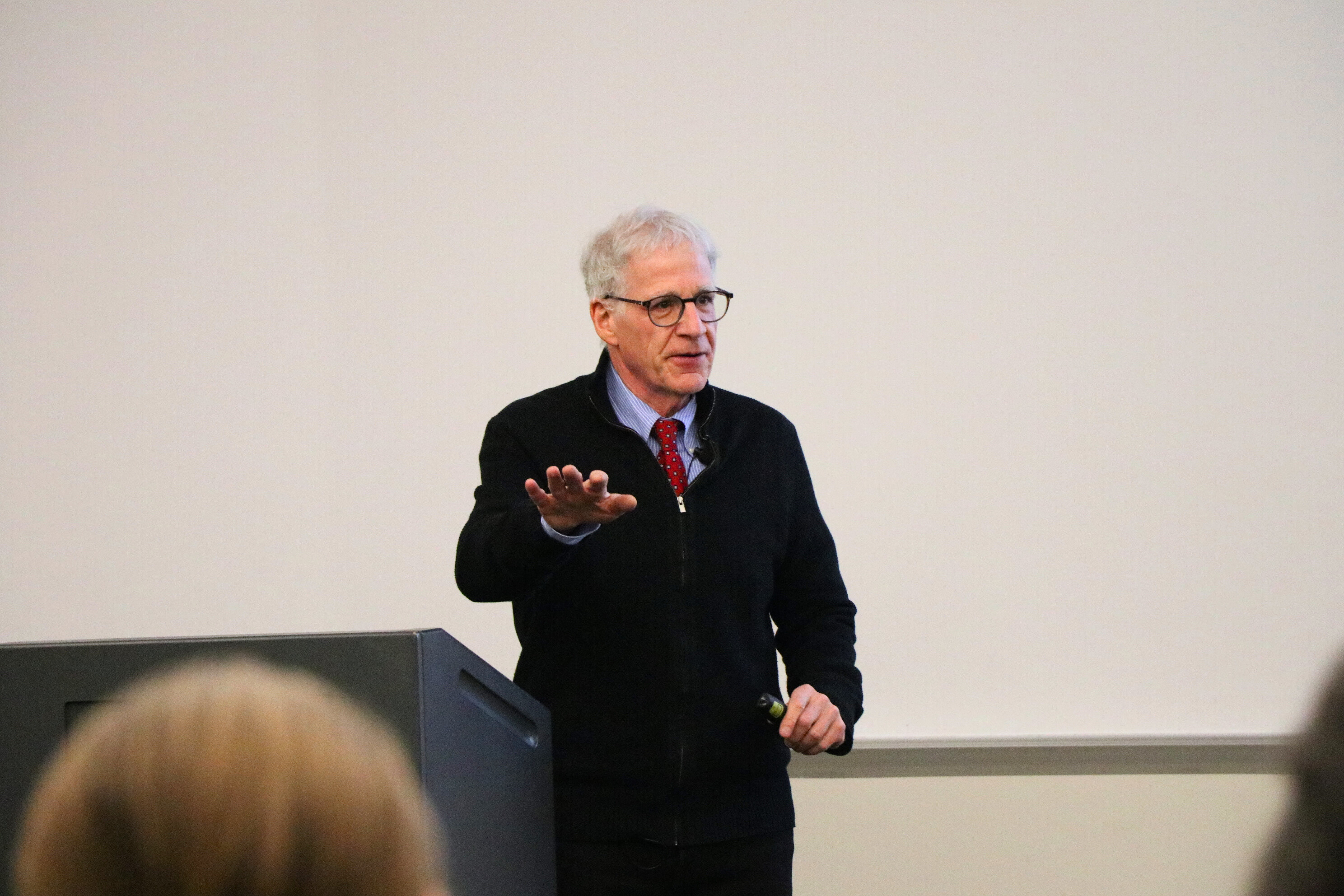
The lecture, the first of two, was drawn from Wineburg’s book “Verified: How to Think Straight, Get Duped Less, and Make Better Decisions about What to Believe Online,” co-authored with Mike Caulfield. Using both historical and digital examples, Wineburg stressed the importance of ensuring that information sources are trustworthy.
“The notion of where something comes from and why it's written is absolutely essential to making a decision about the ideas that fill our heads.”
In a world increasingly dominated by AI, finding trustworthy information is harder than ever. During his second lecture, Wineburg prompted his audience to take out their phones and ask their preferred AI the same yes-or-no question, then provide sources. One person using Gemini got a “no.” One using ChatGPT got “yes,” while another also using ChatGPT got a “no.” Each had sources to back up the answer, so which is to be believed? How could you know?
“Check, people,” Wineburg said. “When it counts, you’ve still got to verify and make the decision about what is credible information. The chatbots and large language models have not obviated the need to search and use our intelligence.”
“I think that it is the most amazing thing we can worry about. The idea that we have something that accesses more information than 40,000 libraries–British libraries, the New York libraries, and your TCU library altogether–in your back pocket.”
To confront the seemingly daunting task of identifying credible information online, he introduced “lateral reading,” a strategy often used by professional fact checkers, as a tool for identifying misinformation and untrustworthy sources. Rather than scrolling “vertically” through a website, lateral reading involves leaving the initial site to seek out other information on the site’s credibility and potential biases.
Or, as Wineburg put it, “Get off the page and use the internet to check the internet.”