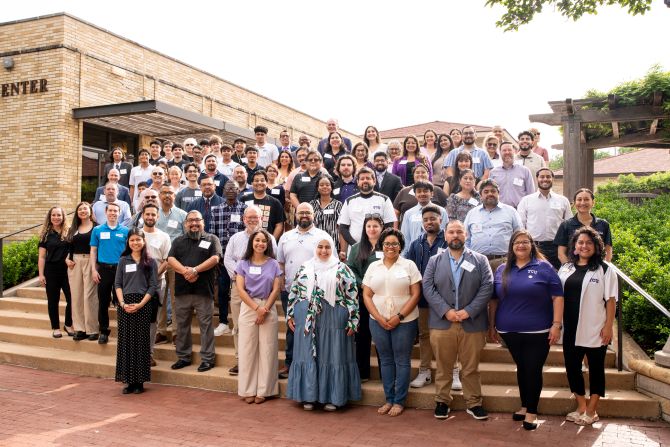
90 students, teachers and other education professionals attended the third annual MAESTRO Conference at TCU. The cornerstone event of MAESTRO, a program seeking to recruit and sustain a community-represented workforce for K-12 teaching positions, the conference provides attendees with the chance to network as they hear from speakers on prominent topics in education.
“The presenters were top-notch,” said attendee John Arrona. “I’m an experienced teacher with one month left in the school year. It's always motivational to connect with other teachers who are feeling the same burn at this time of the year. Hearing the speakers was great.”
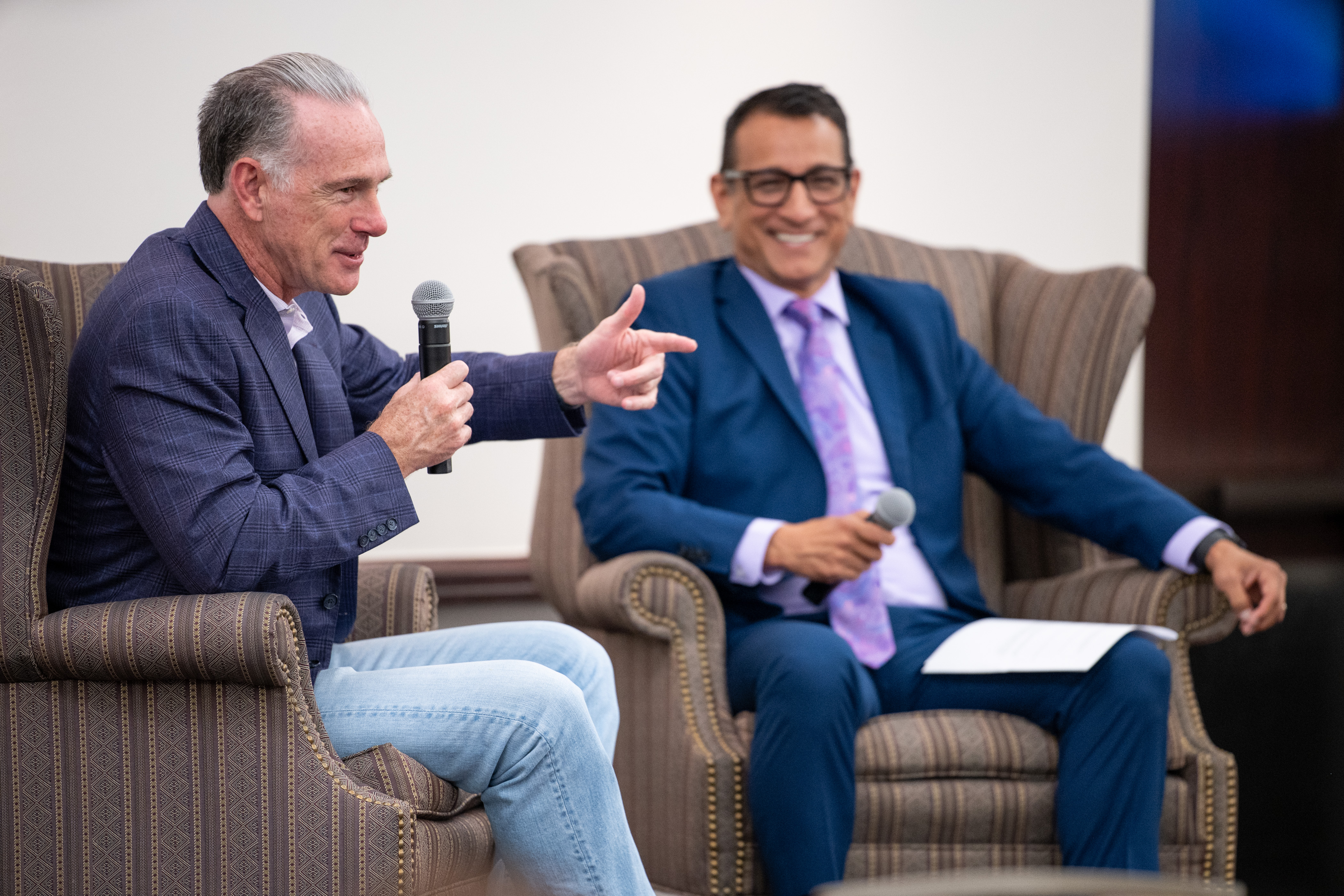
This year’s keynote speaker was Jamie Dixon, head coach of TCU men’s basketball. In conversation with Frank Hernandez, dean of the College of Education, he spoke about his experiences building connections with student-athletes to help them perform at their best. He emphasized the importance of keeping every interaction with students – even criticisms – positive.
“If you do something in a negative manner, that will stick with them. You’ve got to keep them going, keep them confident,” he said. “Throw out a little sugar, too.”
While students attended a panel discussion with teachers, administrators and members of the TCU College Advising Corps, current educators heard from College of Education professor Curby Alexander on “The Jagged Frontier” of teaching in an increasingly AI-dependent world. Alexander offered insights into the strengths and weaknesses of AI and provided ways for teachers to integrate it into their classrooms.
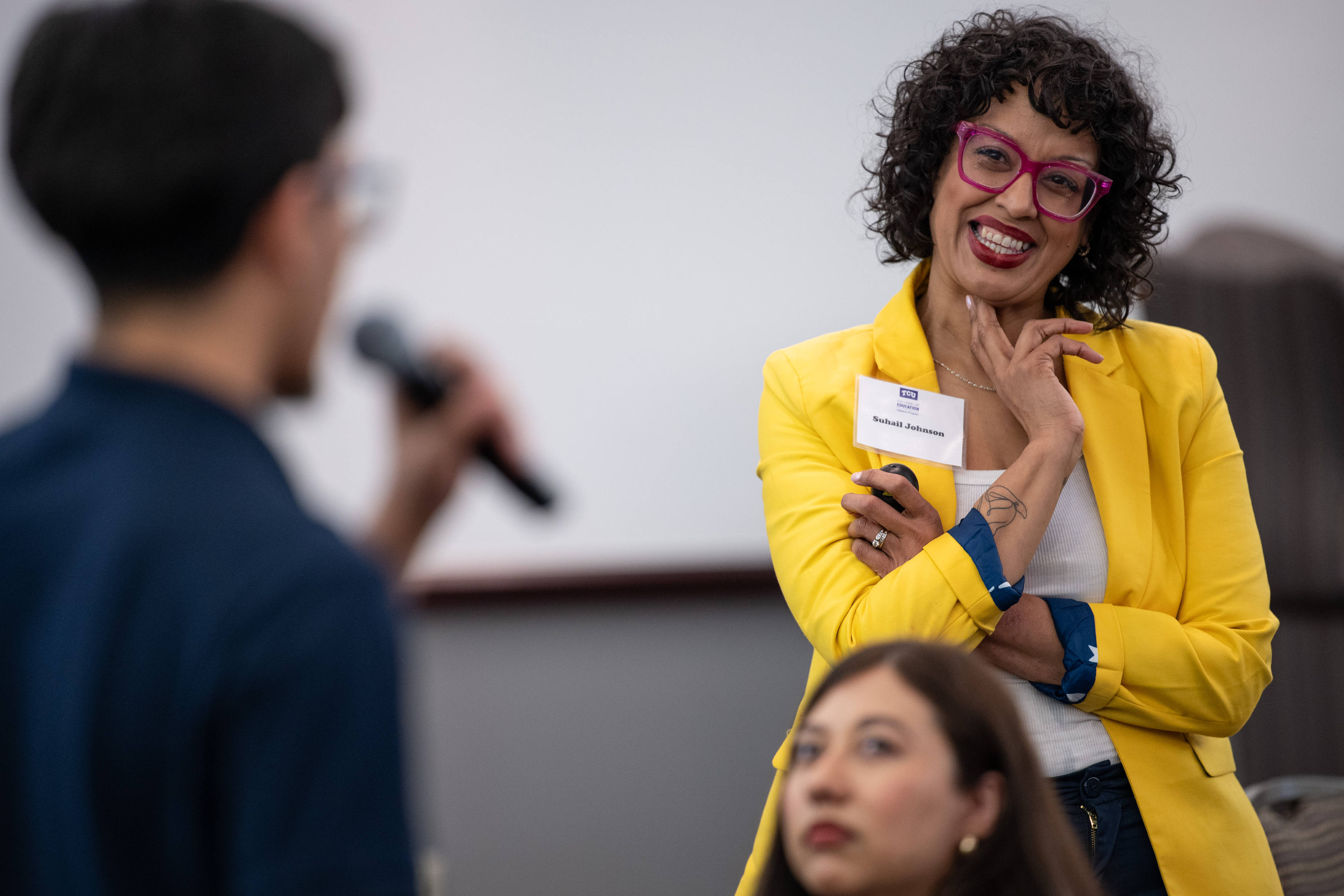
In the afternoon, all attendees heard from Suhail Johnson, director of the BNSF Neeley Leadership Program, about goal-setting and the mental pressure that comes with it. Rather than setting major goals, Johnson said, we should instead use Anne-Laure Le Cunff’s approach of “tiny experiments” – small, time-bound actions designed to test ideas, explore possibilities and build new habits and skills without the pressure of achieving a definitive outcome.
As Johnson puts it, “Tiny experiments are how we stop waiting for perfect and start learning on purpose.”
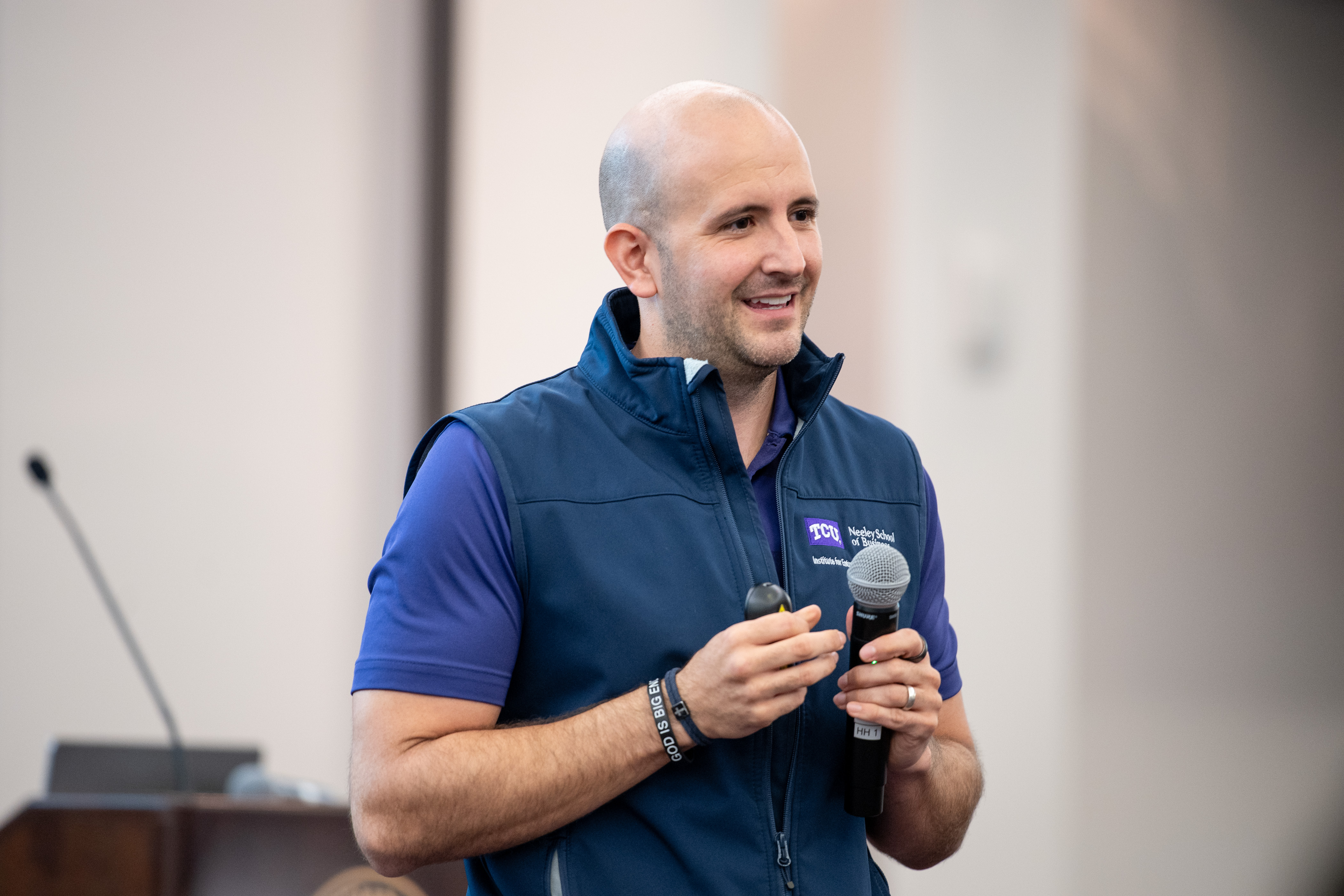
Antonio Banos, Neeley School of Business Bloxom Foundation Professor of Sports Entrepreneurship, then spoke on how educators can navigate rapidly changing student-athlete Name, Image and Likeness (NIL) guidelines. While Texas currently has strict rules on NIL for primary and secondary education athletes (only high school seniors in their second semester and 18 years or older can profit from NIL), many states have little to no restrictions.
“How do you motivate that student?” Banos asked. There is no perfect solution, but Banos suggests engaging with students not in spite of their “professional” obligations, but by integrating their new experiences into their education.
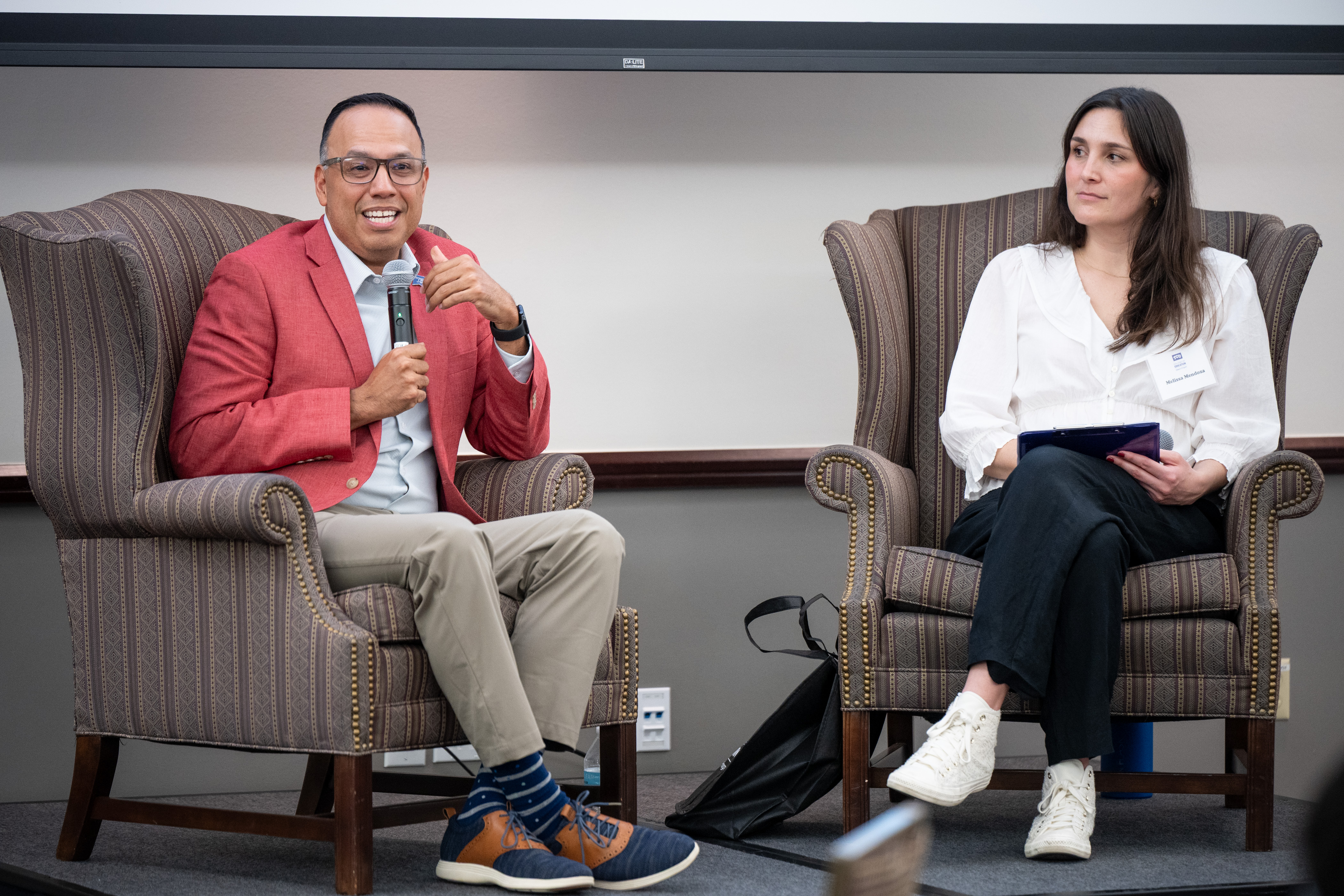
Closing the conference, Assistant Professor Melissa Mendoza, spoke with David Saenz, interim president/CEO of the Tarrant To & Through (T3) Partnership in a fire-less “fireside” chat. Saenz spoke of his early education in a small school system in the Rio Grande Valley. With limited resources, he quickly realized he was missing out on critical educational opportunities.
“I left because I knew I needed more; I knew I wanted more,” he said.
That desire for more and better opportunities eventually led him to lead T3, where he now works to support students and families in ensuring students are college and career-ready.
“Keep learning,” he said. “Keep pushing in. If you see a gap, address it.”