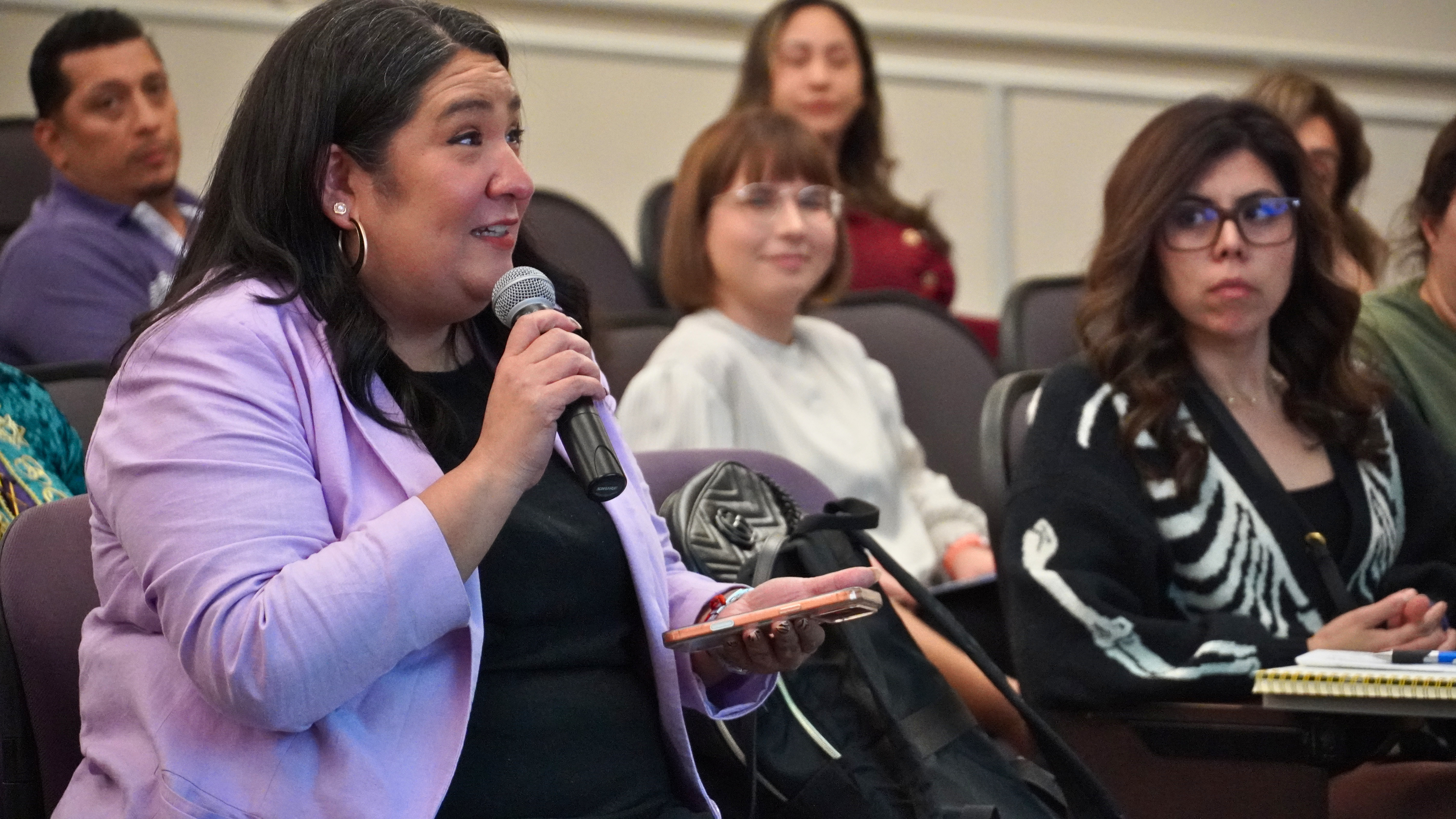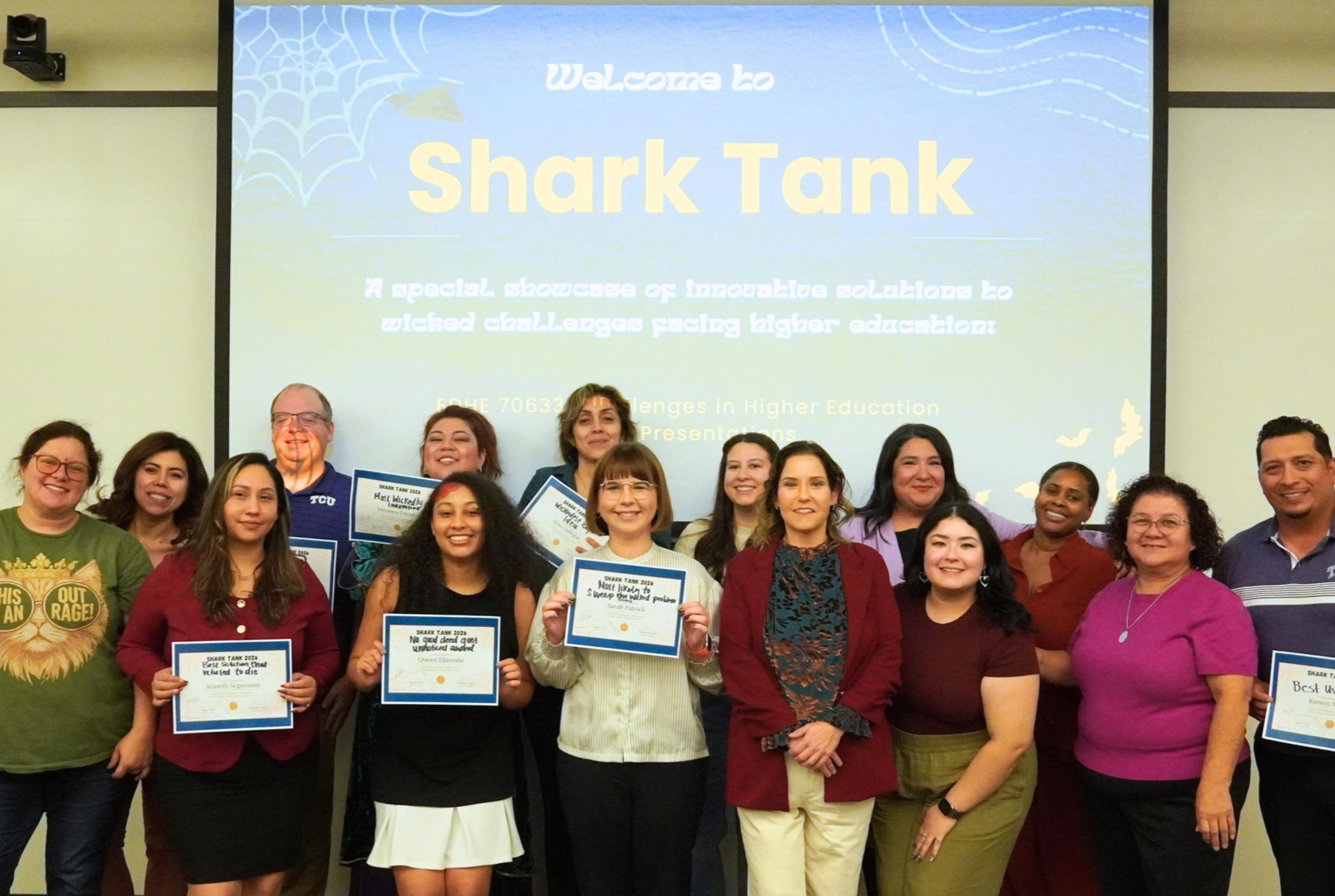
Don’t let the adorable statue of two students reading on a bench fool you. The Amon G. Carter Lecture Hall is a shark tank … at least for students in Texas Christian University’s Challenges in Higher Education class. As their final project, students pitched their ideas for addressing various “wicked challenges” in higher education to a panel of “sharks” (aka experts in higher education).
Students identified and defined a challenge in higher education, then proposed a solution. They had to back their ideas with research to show they could help relieve the problem, even if it wouldn’t solve it entirely. A pre-investment of “$1 million” helped prove the idea's feasibility and sustainability.
“It was really rewarding to be able to study something that’s relevant to the real world and that I’m passionate about,” said Master’s of Education student Queen Elizondo. “And the presentation, the experience of it, is something I’ll be able to take into my professional life.”
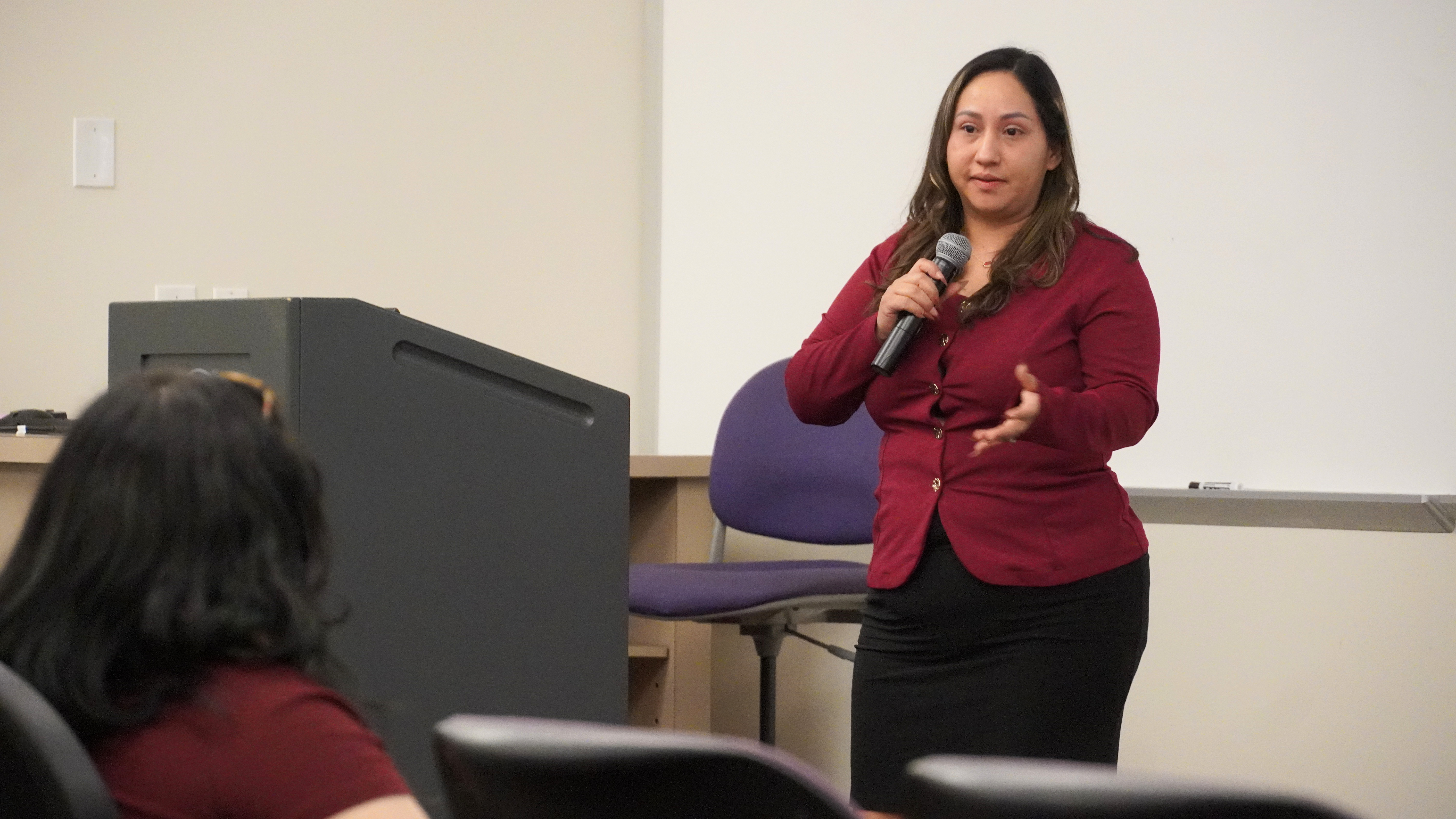
Pitches tackled subjects like student debt management, food insecurity and mounting barriers to entry for international students. Solutions ranged from creating new roles or departments at the institutional level to address the issues at hand, to new programs that work directly with students on solutions, to increased resources for or expansion of existing programs.
Each student is a member of the Tarrant County College Cohort of the M.Ed. in Higher Education Leadership Program, which was established through a partnership agreement in 2022. Since then, 20 TCC employees have completed their M.Ed. degrees, gaining valuable knowledge and skills. A particular focus on leadership in the community college setting has also been a hallmark of the program. New cohorts start each fall semester, and students participate in a hybrid, cohort-style program that lets them complete their studies in two years. The program also offers credit for prior learning and tuition discounts, shortening time to completion.
The “sharks” were alumni from the program’s first cohort, or, as they dubbed themselves, the “First Frogs,” who graduated in 2025. Each represented a different role within a higher education institution and was given a persona to embody and challenges to present to students after their pitches.
Mariza Olmos ’25 M.Ed., supervisor of lifestyle and community learning at Tarrant County College (TCC), was “the skeptic,” pushing students to defend their ideas against questions of evidence and feasibility. Jessica Tran ’25 M.Ed., an enrollment coach at TCC, was “the legal counsel,” tasked with identifying and confronting legal and ethical concerns within students’ pitches. Melody Pitts ’25 M.Ed., coordinator of administrative events at TCC, was “the advocate,” highlighting each proposal’s strengths and encouraging students to think about potential next steps. Amanda Cox ’25 M.Ed., coordinator of educational partnerships at TCC, represented the board of trustees of a higher education institution with considerations of institutional priorities, reputation, risk and investment. Lastly, Yesenia Torres ’25 M.E., an AVID tutor in the Crowley Independent School District, represented higher-education students, posing questions on how each pitch would affect students’ day-to-day lives.
“If I’d been presenting, I would have wanted to do it this way,” Pitts said. “It provides such an open atmosphere, like, you’re not sitting at a desk. You’re free to be creative. And us asking questions that they’re not prepared for gives them a chance to think deeper about both our question and their presentation.”