
College of Education alumna Gina LeCause ’25 (M.Ed. ’26) was honored by the International Literacy Association as the winner of the 2026 Carrice Cummins Outstanding Preservice Educator Award. The award, established in 2025, is given to a student or recent graduate who “demonstrates exceptional promise as a future classroom teacher of literacy learners up to age 12.”
Critical Thinking, Ethical Reflection
LeCause was nominated by Jan Lacina, Bezos Family Foundation Endowed Chair in Early Childhood Education and interim executive director for TCU laboratory schools, and Robin Griffith, professor and chair of the Department of Teaching and Learning Sciences. In her time as an accelerated master’s student within the College of Education, LeCause worked with both professors in the classroom and beyond.
In the summer of 2025, LeCause completed the Warren Fellowship. The program, an ongoing partnership between the TCU College of Education and the Holocaust Museum Houston, prepares educators to teach about the Holocaust through a literary lens, promoting critical thinking and ethical reflection.
“In a time throughout our world marked by increased antisemitism, rising hate and social unrest, Gina understands the importance of teaching empathy, fostering understanding and promoting moral learning,” Lacina said in her letter of recommendation.
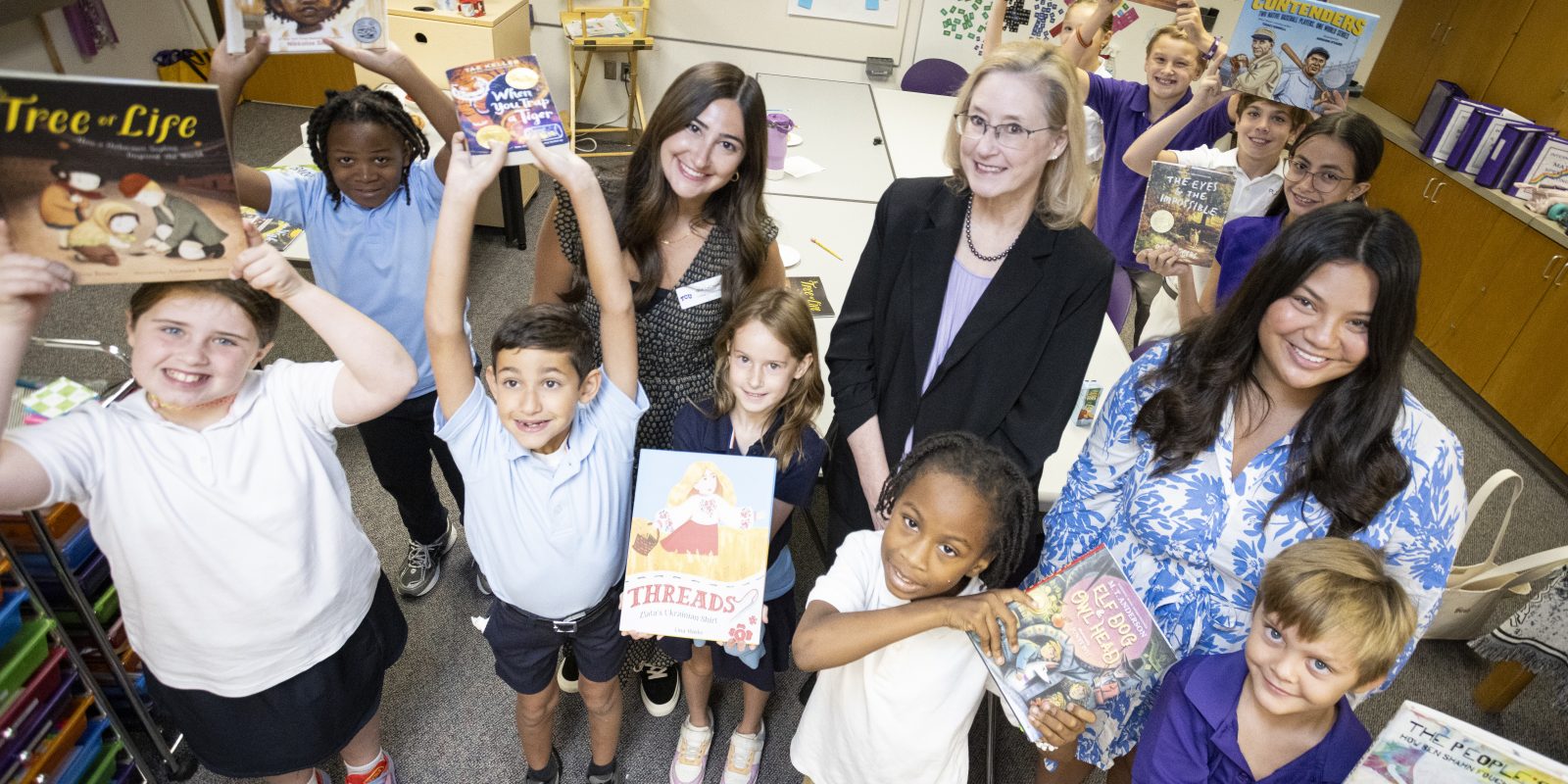
This understanding continued in LeCause’s work at Starpoint School, one of TCU’s two on-campus laboratory schools. Starpoint serves children with learning differences that can make reading difficult and daunting. LeCause helped facilitate a before-school book club founded by Lacina, where children in grades one through six gathered to read together.
“I observed Gina create a welcoming environment where students eagerly discussed texts,” said Lacina, “guiding students to make connections, share perspectives and grow as confident readers.”
At the TCU summer reading camps organized by Griffith, LeCause helped students develop a love of reading. In her letter of recommendation, Griffith included an anecdote about LeCause persisting in her work with one camper until they finally found a book he loved.
“In all that she does, Ms. LeCause is enthusiastic, thoughtful, conscious and dedicated,” Griffith said.
‘I Struggled with Reading’
LeCause was snowed in during a winter storm when she received the email from Lacina
offering to nominate her for the award. Fortunately, the weather gave her plenty
of time to work on her vision statement for her future classroom.
In the vision statement, LeCause engages with Learning by Scientific Design (LBSD),
a set of teaching principles based on data and the science of learning that help guide
teachers in tailoring lessons to how students actually learn, rather than relying
on intuition and tradition.
“Instruction should be focused on students’ deeper understanding,” LeCause asserts,
“rather than just completing tasks.”
On LBSD’s application in a literacy-focused classroom, LeCause explained, “The idea
is to get all the students to the same place but allow them to take different paths
to that place. The focus is on the learning, not the struggle. I struggled with reading
when I was growing up. "I didn’t like it because it was something hard. So I think
students need to know that there are easier paths.”
“The focus is on the learning, not the struggle.”
LeCause aims for her classroom to be “a place where students feel safe and loved. I want my students to feel excitement about learning, whether they are exploring new books, collaborating with classmates or learning a new topic.”
Exciting Days Ahead
This fall, LeCause will make her vision a reality as she begins her first teaching position as a fourth-grade English and language arts teacher at Cannon Elementary School in Grapevine, Texas. Cannon is a STEM school that “integrates the concept of STEM across core content areas and electives when appropriate.”
When asked what her strategy was for getting STEM students engaged in reading, LeCause
said the first step is excitement.
“Excitement is contagious,” she said. “If you get a few kids excited, it grows into
a classroom of excitement. And it’s important to make sure they’re excited about reading.
Passion will get them to where they need to be a lot faster than forcing them to do
something they don’t enjoy.”